

Small changes you can put into practice
Practical ideas for one question, one decision or one useful next step.

Set a Reading Schedule with Days Off Included
Plan a realistic reading window, choose a useful stopping point and make returning after a break straightforward.
Read the guide
Separate Reference Notes from Actions You Intend to Take
Keep useful information without accidentally turning every saved idea into a commitment.
Read the guideKeep Project Evidence Where You Can Find It Again
Save the reason a file matters, its current status and a route back to the original so a completed project remains useful.
Read the guide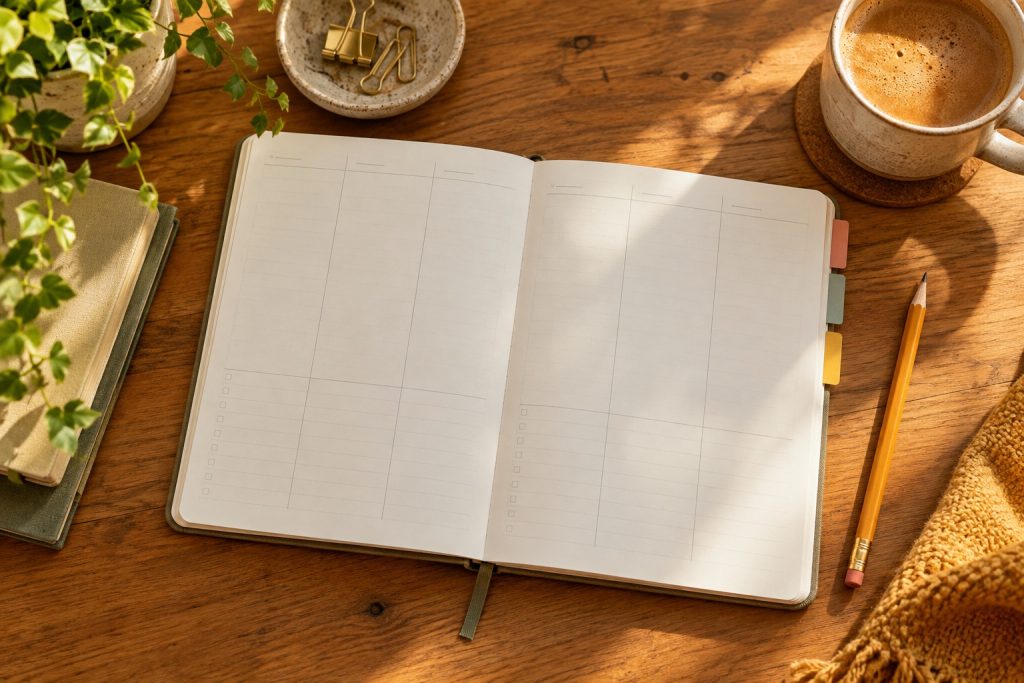
Review a Paper Plan Without Mistaking Busy Pages for Progress
Use a short review to distinguish completed work, changed priorities and obstacles that need a different action.
Read the guideChoose a Planner by the Decisions You Need to Make
Use a sample week to identify the page layout that helps you choose, schedule and revise work.
Read the guide
Prepare a Difficult Conversation with Evidence and a Clear Request
Organize observations, impact and a specific request before discussing an ordinary work or personal coordination problem.
Read the guideCheck the Assumptions and Dependencies Behind a Goal
Find the inputs and decisions a plan depends on before treating its deadline as settled.
Read the guide
Define a Skill Milestone You Can Demonstrate
Replace a broad learning intention with a small task, a visible result and a clear way to review it.
Read the guideCompare Courses by Prerequisites and Practice Requirements
Choose a course by what it expects you to know and what it asks you to do, not just its title or length.
Read the guide