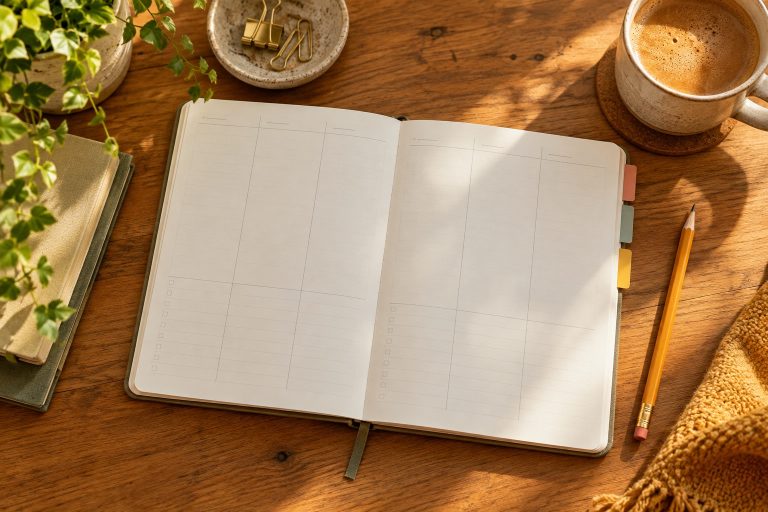
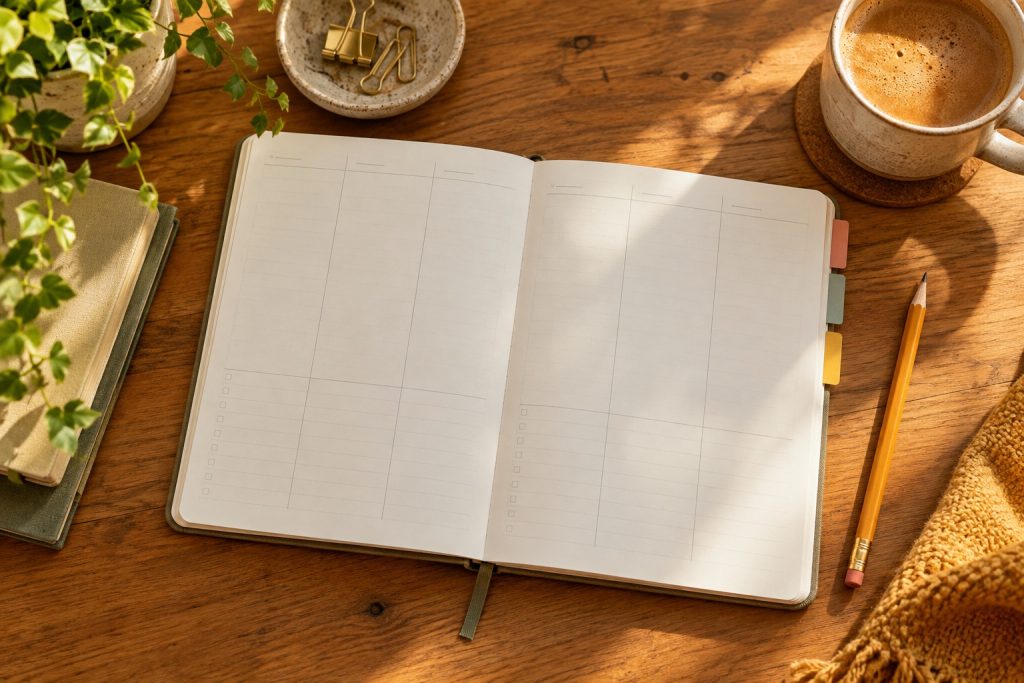
AI-created editorial photo. Not the specific reviewed product.
Before choosing a planner, write down the decision you repeatedly find difficult. You may know what matters but overfill the week, remember appointments but lose project actions, or collect tasks without choosing what to do next. Those are different problems. A useful planner makes the relevant decision easier to see and revisit.
Describe the problem in observable terms
Replace “I need to get organized” with a recent example. Perhaps you scheduled three substantial tasks after an afternoon of meetings and finished none. Perhaps a project stopped because the next action depended on information you had not requested. Describe what you needed to notice at the time.
Then choose one primary view. A weekly spread may reveal crowded days; a daily page may help narrow immediate priorities; flexible notes may hold the context behind a project. No single page needs to carry every kind of information you have.
Trial a real week on ordinary paper
Sketch the candidate layout or use an authorized sample. Add your existing commitments, including travel, preparation and ordinary responsibilities. Next, place one important project action where it could realistically happen. Leave room for changes rather than filling every available line.
Use your normal handwriting and the amount of detail you actually need. If the page becomes unreadable, change the size or reduce what belongs there. Do not judge a layout only by a beautifully arranged example that contains fewer commitments than your own week.
Simulate one interruption
Move an appointment or imagine that a required input arrives late. Identify what you would update and where you would record the next decision. A layout that looks clear only before anything changes may not suit your routine.
For instance, if a draft depends on feedback, write the request and a follow-up date separately from the drafting session. You can then see which action remains possible while waiting. A crossed-out time block is less confusing when the reason and revised action are still visible.
Choose the smallest useful routine
Decide when you will check the page and when you will review unfinished items. A planner left closed cannot help with a decision made elsewhere. Link the check to an existing moment, such as opening your work area or reviewing tomorrow’s appointments, without prescribing an elaborate ritual.
After a short trial, ask whether the page helped you make a specific choice. Did you reduce an unrealistic workload, identify a missing input or remember an important follow-up? Keep the feature that helped. Remove decoration or repeated copying that added effort without improving a decision. Purchase a dedicated planner only when its layout, physical size and ongoing cost support the routine you have actually tried.
Read next
Paper Planners Compared: Daily Structure, Weekly View or Flexible Pages